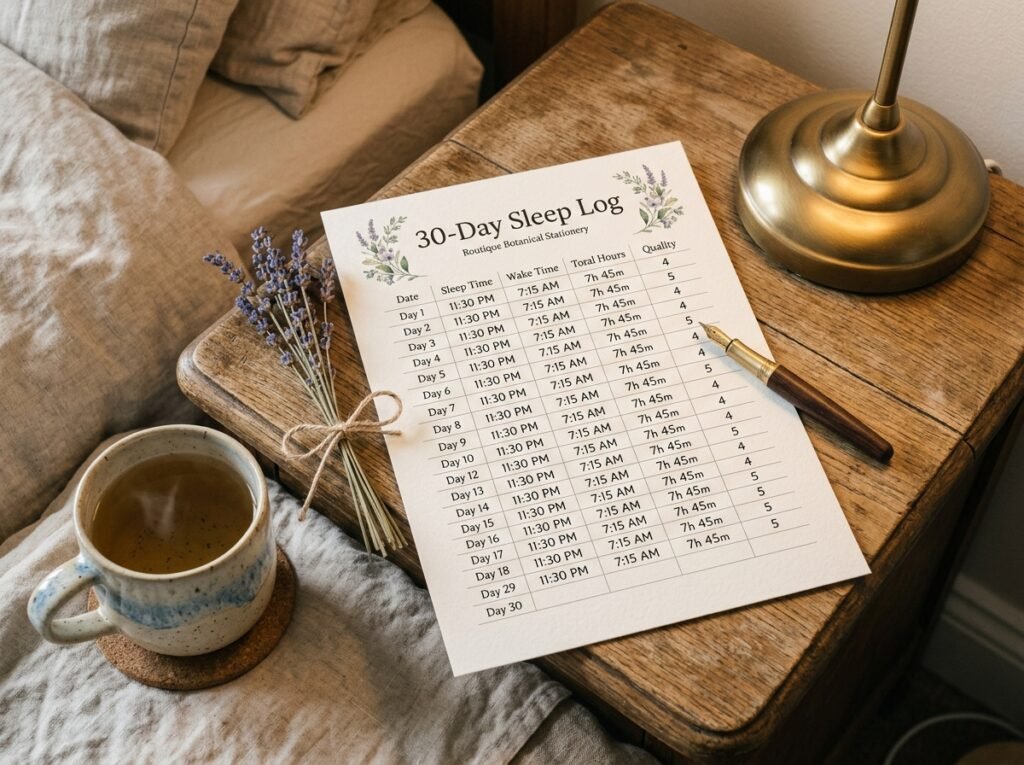
To track sleep patterns without screen time, log four things on a paper sleep log each morning: lights-out time, natural morning wake time, sleep quality as 1–5 stars, and a short daytime energy note. This guide uses a printed log rather than a wearable score, a point the article links to orthosomnia, a term coined by sleep researchers in the Journal of Clinical Sleep Medicine (Baron et al., 2017) for an anxious preoccupation with achieving perfectionistic wearable sleep scores.
Waking up and immediately checking a wearable score that rates your rest as “sub-optimal” primes your brain to feel tired before your feet have even touched the floor. Furthermore, checking a phone right before sleep or upon waking floods your retinas with high-energy blue wavelength light, suppressing natural melatonin production.
The Gentle Power of an Analogue Bedside Sleep Log
Tracking your sleep on a printed page by your bedside returns autonomy to how you actually feel, rather than how an algorithm dictates you should feel. What you do in the first ten minutes after waking shapes the day just as powerfully — see our calm 10-minute morning routine guide.
What to Log (and What to Ignore)
You don’t need minute-by-minute sleep phase analysis to dramatically improve your sleep hygiene. The most valuable signals are simple, macro-level rhythms:
- Lights Out Time: What time did you actually close your eyes and attempt to sleep?
- Morning Wake Time: When did you naturally emerge into wakefulness?
- Subjective Quality (1–5 stars): Did your sleep feel light and fragmented, or deep and restorative?
- Daytime Energy Note: Did you experience an afternoon slump at 2:30 PM, or steady vitality throughout the day?
“Your body’s subjective felt sense upon waking is the truest indicator of sleep quality ever measured.”
After two to three weeks of simple bedside logging, clear patterns emerge without stress: you’ll notice how a dinner eaten ninety minutes earlier impacts your morning vitality, or how a twenty-minute evening walk correlates with unbroken rest. It works best as part of a wider routine, as explained in our guide to how to start a habit tracker you’ll actually keep
Frequently asked questions
What is orthosomnia and why do sleep apps cause it?
Coined by sleep researchers in the Journal of Clinical Sleep Medicine (Baron et al., 2017), orthosomnia is an anxious preoccupation with achieving perfectionistic wearable sleep scores, which increases bedtime stress and fragments rest.
What four signals should I record on a paper sleep log?
Log only macro signals: lights-out time, natural morning wake time, subjective sleep quality (1 to 5 stars), and a brief daytime energy note (such as whether an afternoon slump occurred).
How long should I keep a bedside sleep log to see patterns?
Logging for 14 to 31 nights reveals clear correlations between meal timing, evening walks, screen cutoffs, and morning vitality.
Ready to start small?
Pick one habit that matters to you today. Download your tracker, print it out, and take your very first step.