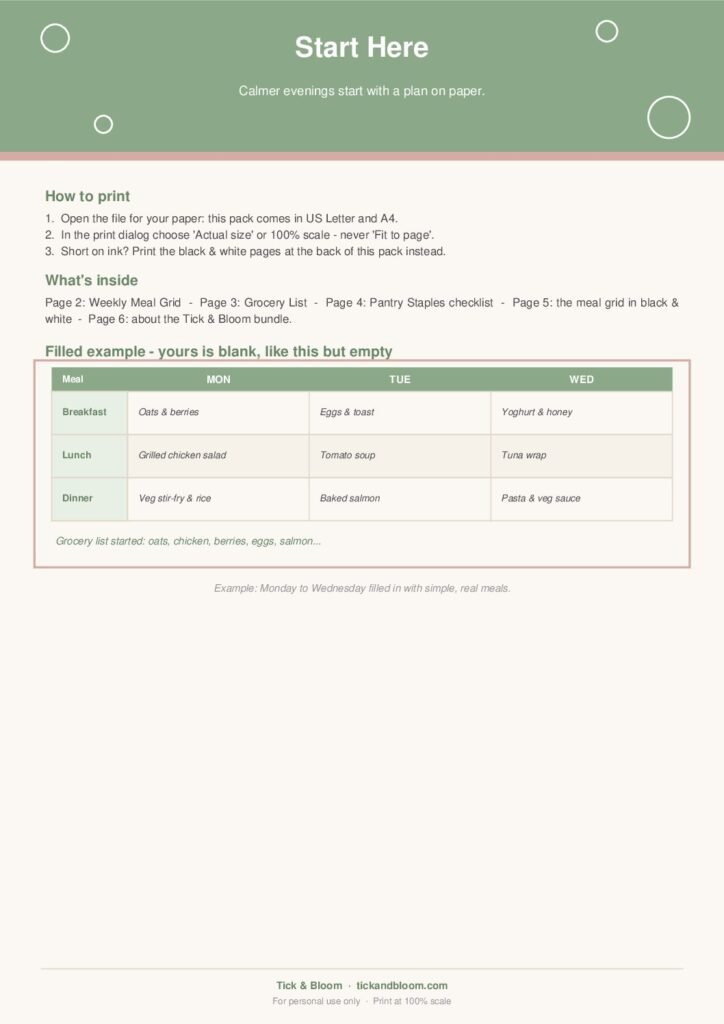
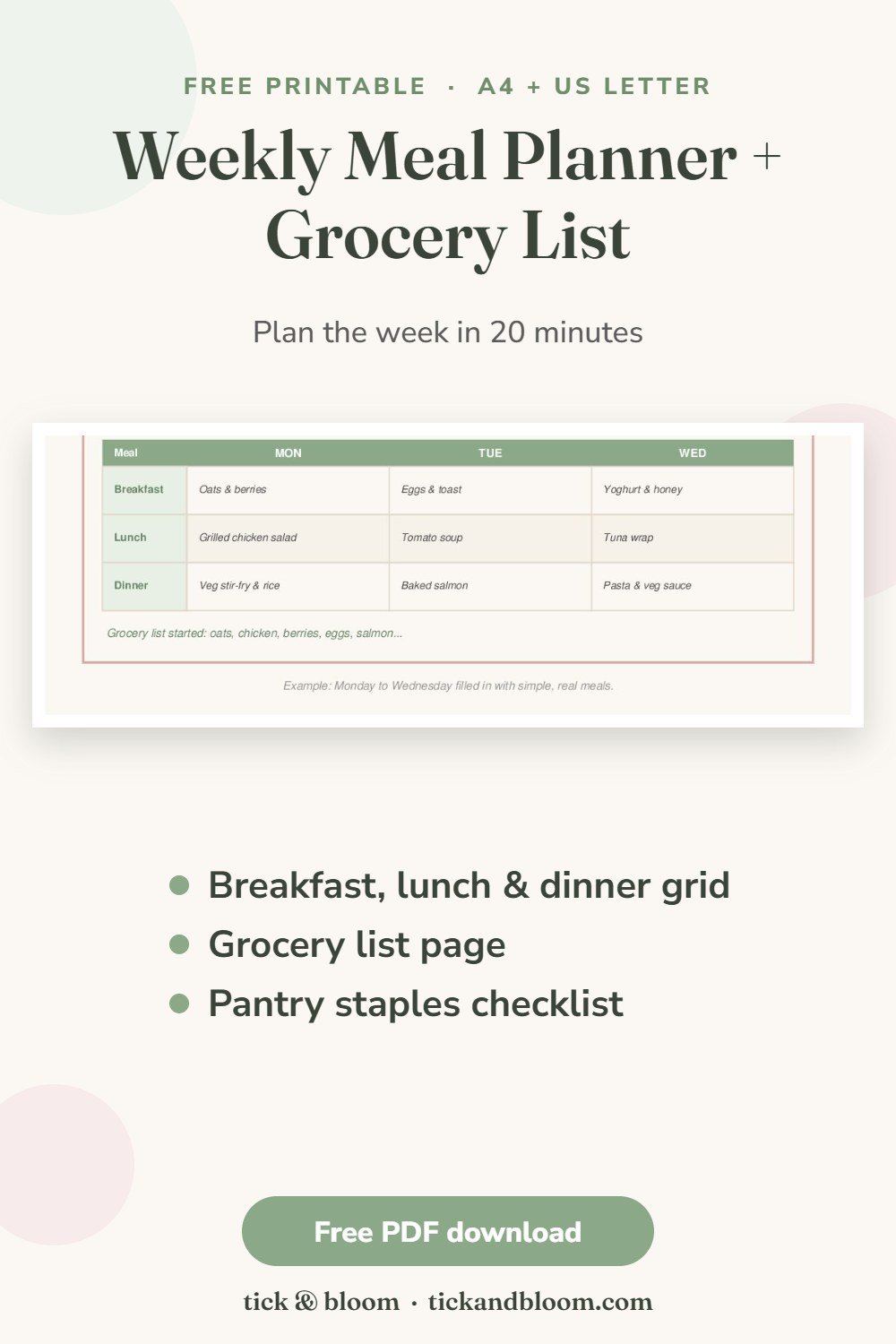
A weekly meal planner printable lets you decide the week’s breakfasts, lunches and dinners once, on one page, instead of every evening at 6pm. This free 6-page pack gives you the weekly grid, a grocery list and a pantry staples checklist, in A4 and US Letter, with no sign-up.
Why plan meals by the week?
Most of the stress around food is not cooking. It is deciding, again, every single day. A weekly plan moves all of those small decisions into one twenty-minute sitting, and the rest of the week runs from the page on the fridge.
It also changes the shopping. When the plan comes first, the grocery list writes itself from the grid, you buy what the week needs, and fewer half-used ingredients end up in the bin.
What is inside the free pack
- Weekly meal grid: seven days with breakfast, lunch and dinner rows, plus space for snacks and notes.
- Grocery list: grouped so you can build it straight from the grid and shop aisle by aisle.
- Pantry staples checklist: the basics you keep in the cupboard, so you only buy them when they actually run low.
- A black and white copy of the grid for home printing.
- A how-to-print page and a filled example showing a real week planned out.
Everything is undated, so you can print a fresh grid each week or slip one into a plastic sleeve and use a dry-wipe pen.
How to plan a week in twenty minutes
- Check the week first. Late meetings, school events, a night out, guests. Busy evenings get the quickest meals; free evenings can take the slower ones.
- Start with dinners. They take the most thought. Write five, and leave one or two nights as “leftovers” or “something simple”. A plan with breathing room survives the week.
- Repeat breakfasts and lunches. Two or three breakfasts on rotation is plenty. Cook once, eat twice: make extra dinner on purpose and write “leftovers” in tomorrow’s lunch box.
- Check the pantry checklist. Tick what you already have before you write the shopping list, not after.
- Write the grocery list from the grid. Go through each meal and add only what is missing. Then put the grid on the fridge where everyone can see it.
Keeping it going after week one
Keep your old grids. After three or four weeks you will have a set of tried meals you can simply copy, and planning drops to ten minutes. Write a small tick next to meals the household liked and a cross next to the ones nobody finished.
If planning meals is a habit you want to build, track it like one. Add “Plan next week’s meals” as a Sunday row on our monthly habit tracker. And if keeping the grocery bill under control is part of the goal, the grocery line on our monthly budget planner shows you, week by week, whether the plan is working.
Planning breakfasts with children in mind? Our morning routine checklist for kids pairs well with a fixed breakfast plan on school days.
Frequently asked questions
Is the meal planner free?
Yes. The full 6-page pack is free to download and print for personal use, with no email or sign-up.
Does it work for families and for one person?
Yes. The grid has no portion sizes or names printed on it. Families often add a note for packed lunches; people cooking for one often plan four dinners and use leftovers for the rest.
Can I use it for special diets?
Yes. The grid is blank, so it works for vegetarian, halal, gluten-free or any other way of eating. Add a line at the top for anything you always need to remember.
What if we do not stick to the plan?
Swap days rather than abandon the week. If Tuesday’s dinner did not happen, move it to Thursday and cross something else out. A plan that bends is still a plan.
Which paper size should I print?
A4 for the UK, Europe and most of the world; US Letter for the United States and Canada. Every pack on our free printables page comes in both sizes.
Plan this week
Print the grid, check your calendar, and write five dinners tonight. Build the shopping list from it, put the page on the fridge, and let the week run from there.